
I saw some buds today!
I saw some buds today!
Today I saw some bright green buds,
I saw some buds today!
It could be premature
It’s hard to be quite sure
and certainly it’s early for the signs of flowering May
nonetheless, I saw some buds today!
So, there’s that, and I’m really pleased about it, but our mild winter in Prague was offset by the frozen hell the eastern half of North American has gone through this year. Weather comes, weather goes. Today, we have bigger news.
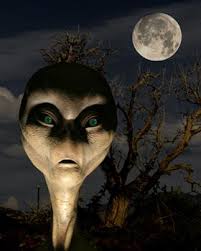
Actually, it’s as good a guess as any
NASA announced today that they have confirmed 715 new exoplanets! Well, new to us, anyway. They’ve undoubtedly already been there for awhile. To put that in perspective, it brings the total to about 1,715. Overnight, the number of known exoplanets has nearly doubled. Which means that, due to new techniques, the rate of discovery is becoming faster. And it will become faster still. Since science is not facebook, there is no 5,000 friend limit. It seems very likely to me that before this decade is out, we’ll be talking about hundreds of thousands of exoplanets, if not millions.
Still, there is a big difference between knowing they are out there, and finding intelligent life on any of them. Out of those 715, only 4 are in their Sun’s ‘Goldilocks Zone,’ the distance where it’s likely to not be too hot (like Mercury) or too cold (like Neptune) to support life. Of those, we have no idea which ones have atmospheres. We know, just from our own solar system, that some planets do and some don’t, but we don’t have a large enough sample to know the galaxy wide average. Ditto a solid surface. Ditto water.
Moving on through the Drake Equation, we have no idea whether every planet that can develop life does develop life. Beyond that, we don’t know that intelligence, and technological ability are always the end point of evolution. (not the same thing – dolphins might all have Stephen Hawking level IQ’s, without that thumb they’re never going to invent civilization) There might be lots of planets out there where dinosaurs still rule, and they certainly aren’t going to be answering our messages any time soon.
So, we still have a long way to go, and even a sample of millions may not be enough. Nonetheless, like those first, tiny, bright green buds which foretell the eruption of life which is spring, today’s news is a sign of things to come, and brings hope.
 www.gurukalehuru.com