
Steven G. Brant has a good article up on the Huffington Post. He leads in with the Wisconsin thing and how this is a pivotal moment, but then pretty soon he is on to how we need to transform our thinking and quoting Buckminster Fuller, which more people should do, by the way.
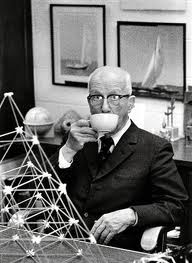
Buckminster Fuller, the Da Vinci of the 1900s
Fuller said, way back in the 30s, that the world was capable of supporting all of it’s human residents in style – plenty of food, nice accommodations, the whole thing, and the wealth could just keep on rolling in, if we could just stop our self-destructive behavior and get to it. Brant said pretty much the same thing. An economy of abundance, he called it, as opposed to today’s politicians who basically spend 90% of their time telling us we’re fucked no matter what we do. An economy of abundance. Fuller called it The Dynamic Optimalization of the Multi-Faceted Realization of the Ever Increasing Potential of the Micro-Macro Universe, or some long winded shit like that which explains, I guess, why nobody reads Fuller any more.
Anyway, wealth, according to Fuller, was raw materials x available energy (e.g. manpower) x state of the art technology. For instance, are there enough raw materials on earth to build everybody a nice house? Sure. Does the technology exist? Sure. Is there enough force? Sure. So, everybody should have a house.
Instead, most technology is employed in the twin arts of blowing each other up and manufacturing and selling unnecessary products, energy is wasted in driving mindlessly from place to place and manpower is wasted by the hundreds of thousands in unnecessary wars. Natural resources is sort of a constant.
Once we start realizing that there really is enough to go around, the world will be a beautiful place.
 www.gurukalehuru.com
Nobody reads Fuller anymore because most people in America aren’t even encouraged to read. I’ve read Fuller extensively and his writing and ideas are more pertinent than ever.
His last major book, Critical Path; warns us that time is running out on the oil-based industrial civilization we have built. He shows the way out though, which is through design and efficient use of existing resources and energy that we do not harness in the best way. Thanks for posting about him.