
Voyager 1 and Voyager 2 were both launched 35 years ago this month, in the August of 1977. In their 3 decade plus service to mankind, they have explored Jupiter and Saturn and a few of their numerous moons, they have boldly gone where no man has ever gone, they have brought the solar system into focus.
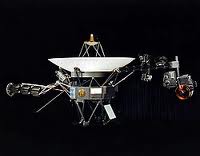
History’s Greatest Explorer
Now, they are about to do much more. Out beyond Pluto, they are now at the outer limits of the influence of our sun, crossing the line into deepest, darkest, coldest, emptiest interstellar space.
Except it might not be as empty as we once thought it would be. At the time the Voyager twins were launched, the general consensus among the scientific community was that there was nothing between solar systems except light years and light years of empty space. For about the last year or so, scientists are of the opinion that there might be billions of rogue planets planets out there, of different shapes and sizes.
I sea an analogy with islands in the sea. There might be boats crossing that ocean every day, but if the island is just out of their sight, it might as well be a million miles away. And space is bigger than any sea, by a factor of a gazillion or so.
So, the most probable scenario is that our two little intrepid robot explorers will carry on, and we will hear nothing from them for a long time, maybe forever. But wouldn’t it be cool if, free of the solar system, they suddenly cross an intergalactic freighter line and, boom, suddenly we’re part of the Federation?
In either event I say: “Well done, little metal buddies. You’re doing the human race proud.”
 www.gurukalehuru.com